One Back Tickle After Another
adapting Vineland and interactive movie experiences.

I thought One Battle After Another was quite good, though not without its flaws. I’m not entirely sure what I would have thought about it had I not read Vineland for the first time shortly before seeing it. I definitely plan on eventually reading the novel again as it was incredibly rich, and I’d like to see OBAA again as I missed like three minutes at one point. Some quick background, I believe I’ve read The Crying of Lot 49 once two decades or so ago, but that’s the only Pynchon I’d read before, and I honestly haven’t seen a Paul Thomas Anderson movie in a decade and a half, though I think I’ve seen all of them except the three that came out before OBAA once, maybe twice for some of them. All of this is basically just to say that I’m not an expert on either artist’s oeuvre, and I’ve never read or seen Inherent Vice. That said, Vineland was an interesting and textured read that was well adapted by Paul Thomas Anderson, even if there were certain elements that never would’ve been translatable on film and other relatively minor quibbles I might have with it. Minor spoilers ahead.
So, one aspect that I enjoyed in Vineland, but don’t blame PTA at all for not including in the adaptation, is the Thanatoids. Though at first, they are described almost like a cult, setting up camps outside of towns and such, you begin to realize over the course of the book that these people aren’t quite alive. I don’t think they’re ever explicitly referred to as being ghosts or shades, except in one instance, and some of the living characters do interact with them and mention them, but they are definitely not one hundred percent of the living. That would’ve taken far more work to incorporate into a movie, even with a nearly 3-hour runtime. It’s simply one of the benefits of novels over movies that you can include these kinds of abstract concepts. There are characters in the movie that don’t appear in the book, obviously, and some of them were a bit underdeveloped, but having them return as ghosts or shades after they’ve been killed on screen wouldn’t have solved that problem. While some of these characters may have been underdeveloped, there were certainly some memorable and interesting ones in the movie. I will leave writers more knowledgeable than me to discuss any potentially problematic racial overtones of some of these characters:

.The next thing I want to discuss is a little bit more critical of Paul Thomas Anderson. One of the main concepts in the book is the concept of tube or TV addiction. There was less information about how the media landscape fueled or gave birth to the reactionary movement in the movie than there was in the novel, which isn’t the end of the world, but led to the movie feeling a little flatter than it otherwise could have. One of the themes in Pynchon’s novel basically describes how TV is addictive and makes people unsure of what reality actually is, which seems like it could have been a ripe vein to mine given our ongoing fascist movement. The fascist movement we see onscreen seems relatively all-powerful and already in control of most of the media. The French 75 seem to be the ones focused on spectacle, rather than the [mostly] hyper efficient government goons. The only real reference we get about the information environment is Leonardo DiCaprio’s character getting into his divorced dad era on social media. Zoyd Wheeler, the character in the book, is a little bit of a burnout as well, sure, but he also plays surf music and comes across as a more interesting character. He’s also only one of several important characters in the novel, as opposed to the locus of attention like he seemed to mostly be in the movie.
It’s no problem to me that PTA didn’t include the plot elements surrounding trying to get a movie made, which is the impetus for the antagonists and others searching for Frenesi Gates [Perfidia Beverly Hills in the movie]. That’s a well-tapped trope in movies and OBAA’s plot was interesting regardless. However, a major arc in the novel is Prarie Wheeler [whose character was played excellently by Chase Infiniti in the movie] searching for her mother, Frenesi. The movie analog of Prarie, while an interesting character in her own right, is mostly dragged along by other characters and seems to lack the agency that she had in the novel. This is somewhat similar to the novel where she is accompanied to the ninja nun convent by a badass assassin, but in the book, she’s portrayed in a much richer manner with more of her wants and desires than we see demonstrated in the movie-- the role of her mother in her life, beyond just her being a snitch, is far more important. Alright, I’ve gone longer than I intended for a roundtable and didn’t even get to the differences between Sean Penn’s Lockjaw and Brock Vond or how the movie portrayed leftist movements.
One last thing, though, I caught the last showing of the movie the night before it officially opened and inadvertently bought tickets to the 4DX experience at the theater. It added an interesting layer to the movie, with the seats shaking during explosions or when the camera moved fast. There were smoke machines, flashing lights, and the seat blew air at your face when there was a gunshot on screen. It also poked me in the back during the pegging scene. Thomas Pynchon is an interesting author who provides a more nuanced understanding of leftist politics [Frenesi refuses to cross a picket line at the airport until everybody on the line votes to make an exception for her!] as well as race, but despite his talent writing, and the fact the book will almost always be better, there was no simulated pseudo-pegging while reading the book.
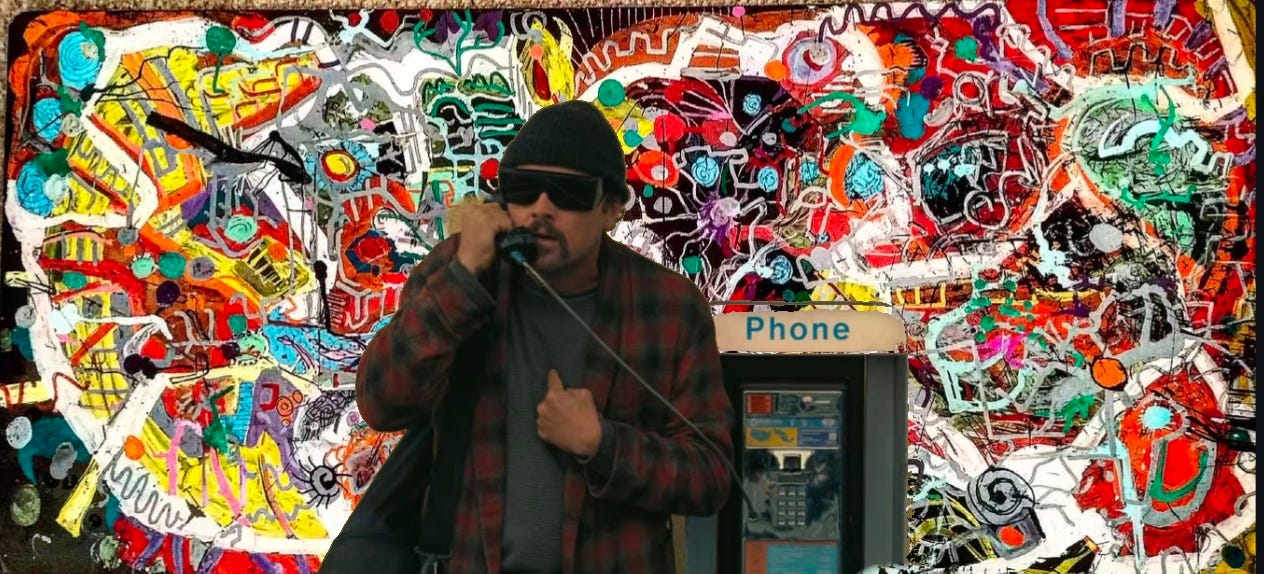
Here’s the full image that was clipped in the header: